The Complete & Ultimate Guide to Stop Wasting Money: 12 Proven Strategies to Keep More Cash in Your Pocket

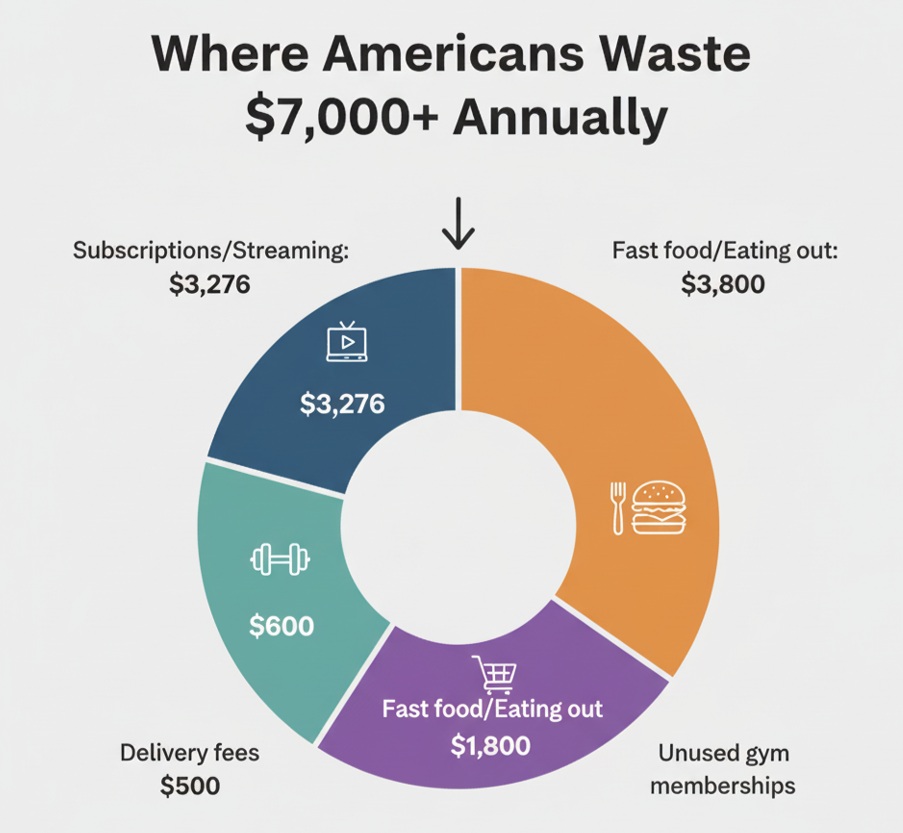
If you’re like most Americans, you’re probably wasting money without even knowing it. According to recent studies, the average household loses over $7,000 annually to unnecessary spending habits and hidden money leaks. That’s a vacation, an emergency fund, or serious progress toward financial independence—just slipping through your fingers.
The good news? Once you identify where your money is going, you can take back financial control and redirect those dollars toward what truly matters. This guide will show you exactly how to stop wasting money using research-based strategies that work for real people with real budgets.
Table of Contents
Understanding Your Money Leaks: The First Step to Financial Success
Before you can stop wasting money, you need to know where it’s going. Think of your finances like a bucket with holes—no matter how much you earn, you’ll never fill it up until you plug those leaks.
Conduct Your Personal Financial Audit
Set aside one hour this week to review your spending. Grab your bank statement and credit card statement from the past three months and highlight every charge you forgot about or didn’t expect. You’ll likely be surprised by what you find.
Action steps:
- Print or download statements from all accounts
- Use different coloured highlighters for categories (subscriptions, food, shopping, etc.)
- Calculate monthly totals for each category
- Identify patterns in your spending habits
This financial audit is the foundation of your journey toward saving money and achieving financial success.
1. Cut the Cord on Subscription Creep
Americans now spend an average of $273 per month on subscriptions—that’s $3,276 per year. Many people underestimate their actual subscription costs by nearly 40%.
The Subscription Trap
Streaming services are the biggest culprit. You might have started with Netflix, then added Hulu for that one show, Disney+ for the kids, HBO Max for new movies, and Peacock for the next season of your favourite series. Before you know it, you’re paying more than the old cable bill you proudly cancelled.
Common subscription money leaks:
- Multiple streaming services ($70-100/month)
- Music platforms you rarely use
- Gym memberships for gyms you don’t visit
- Magazine or news subscriptions you don’t read
- App subscriptions you forgot about
Business Expenses Add Up Too
If you’re self-employed or run a side hustle, check your business expenses carefully. Social media schedulers, stock photo memberships, and video editing tools can drain $100-300 monthly. Ask yourself: are you actually using these tools enough to justify the cost?
How to fix it:
- Set a recurring calendar reminder quarterly to review all subscriptions
- Cancel anything you haven’t used in 30 days
- Share family plans with trusted friends or relatives
- Rotate streaming services—subscribe for one month to binge your shows, then cancel
- Look for annual plans only if you’re certain you’ll use the service all year
2. Conquer Fast Food Spending and Take Back Your Kitchen
The average American spends $3,500 per year eating out and on fast food spending. That’s nearly $300 per month for convenience that’s costing you both money and often your health.
The Real Cost of Eating Out
That $12 lunch adds up to $240 per month if you buy it just 20 times. A family dinner at a casual restaurant can easily hit $60-80 with drinks and tip. Do that twice a week and you’re spending over $500 monthly.
Meal Planning: Your Secret Weapon
Meal planning isn’t about becoming a gourmet chef—it’s about making intentional spending decisions before you’re hungry and vulnerable to impulse buys.
Practical meal planning strategy:
- Dedicate 30 minutes each Sunday to plan the week
- Check what’s already in your fridge and pantry first
- Plan meals around sale items from store circulars
- Prep ingredients in bulk (chop vegetables, cook grains, marinate proteins)
- Keep emergency meals on hand (pasta, frozen vegetables, canned beans)
Smart Grocery Shopping Tactics
Americans waste approximately $1,500 annually on groceries they throw away. Stop wasting money on food that rots in your fridge with these proven strategies:
- Always shop with a grocery list and stick to it religiously
- Avoid shopping hungry—you’ll spend 60% more on impulse buys
- Buy store brands for staples (often made in the same facilities as name brands)
- Use cashback apps like Ibotta or Fetch Rewards
- Shop the perimeter first where whole foods live
- Compare unit prices, not package prices
3. Defeat Impulse Buys with the 48-Hour Rule
Impulse buys account for 40-80% of all purchases, depending on the category. These unplanned purchases are major money leaks that keep you from reaching your financial goals.
The Psychology Behind Impulse Spending
Retailers are masters at triggering emotional purchases. From strategically placed candy at checkout lines to “limited time offers” online, everything is designed to make you buy now and think later.
Implement the 48-Hour Rule
Before making any non-essential purchase over $50, wait 48 hours. For items over $200, wait a week. You’ll be amazed how many “must-haves” you completely forget about.
Additional impulse control strategies:
- Delete saved payment information from online shopping sites
- Unsubscribe from promotional emails
- Remove shopping apps from your phone’s home screen
- Use the “save for later” cart feature instead of buying immediately
- Calculate the “hours worked” cost (if you earn $25/hour, that $100 item costs 4 hours of work)
4. Master Online Shopping Without the Waste
Online shopping makes it dangerously easy to spend money, especially with one-click purchasing. But you can enjoy the convenience without wasting money on unnecessary purchases.
The Hidden Costs of Convenience
Delivery fees, shipping costs, and “just $5 more for free shipping” upgrades trap many shoppers. These small fees add $30-50 monthly for frequent online shoppers.
Money-saving online shopping tips:
- Choose the pick-up location option when available (often free)
- Consolidate orders to minimize shipping costs
- Sign up for free trials of Amazon Prime-type services only when you have multiple items to order, then cancel
- Use browser extensions like Honey or Capital One Shopping for automatic coupon codes
- Check if items are cheaper in-store before ordering
The Returning Items Problem
Americans spend over $550 billion on products they end up returning items. But many never complete the return, leaving money on the table.
Create a return system:
- Keep a designated spot for items to return
- Put the return window date in your phone calendar immediately
- Batch returns in one trip weekly
- Consider whether free shipping on a purchase is worth it if you often return items
5. Build a Capsule Wardrobe and Stop Fashion Waste
The average American throws away 81 pounds of clothing per year, much of it barely worn. Fast fashion is fast cash drain.
What Is a Capsule Wardrobe?
A capsule wardrobe consists of 30-40 versatile pieces that mix and match effortlessly. This approach to clothing stops you from wasting money on trendy items you’ll wear twice.
Building your capsule:
- Invest in quality basics in neutral colors
- Choose pieces that work for multiple occasions
- Follow the “cost per wear” rule (a $200 coat worn 100 times costs $2 per wear)
- Shop your own closet first before buying anything new
- Sell or donate clothes you haven’t worn in a year
6. Automate Your Way to Financial Independence
The best way to stop wasting money is to make saving automatic. When saving requires conscious effort, it often doesn’t happen.
Set Up Your Automation System
Automated savings strategies:
- Set up automatic transfers to savings the day after payday
- Use apps like Digit or Qapital that save small amounts automatically
- Enroll in your employer’s 401(k) with automatic increases
- Round-up programs that invest your spare change
- Separate checking accounts for bills, spending, and fun money
This approach to organizing finances removes temptation and ensures you’re prioritizing your future.
7. Audit Recurring Charges and Negotiate Everything
Your bank statement likely shows recurring charges you’ve forgotten about. These subscriptions and automatic payments are silent budget killers.
The Negotiation Mindset
Most Americans never negotiate their bills, but one phone call can save hundreds annually. Companies would rather keep you at a reduced rate than lose you entirely.
Services you can negotiate:
- Internet and cable bill (call annually and ask for current promotions)
- Cell phone plans
- Insurance (home, auto, life)
- Credit card interest rates
- Medical bills
- Gym memberships
Script for negotiating: “I’ve been a loyal customer for [X years], but I’m finding the cost difficult to manage. What promotions or discounts can you offer to help me stay with your service?”
8. Plan for Savings Like You Plan for Expenses
Most people plan their expenses but leave savings to whatever’s leftover. This backwards approach keeps you stuck in the paycheque-to-paycheque cycle.
The Pay Yourself First Method
Treat savings like a non-negotiable bill. The 50/30/20 budget is a simple framework: 50% for needs, 30% for wants, and 20% for savings and debt repayment.
Building your budget:
- List all essential expenses (housing, utilities, insurance, minimum debt payments)
- Assign 20% of income to savings goals
- Everything else is discretionary spending
- Review and adjust monthly
- Use apps like YNAB (You Need A Budget) or Mint for tracking
9. Practice Frugal Grocery Shopping Without Deprivation
Frugal grocery shopping doesn’t mean eating ramen every night. It means being strategic about where your food dollars go.
Advanced Grocery Strategies
Timing is everything:
- Shop on Wednesday evenings when new sales overlap with old ones
- Buy meat and seafood close to sell-by dates (often discounted 30-50%)
- Stock up on non-perishables during loss-leader sales
- Use the clearance racks for bread, produce, and bakery items
Store strategy:
- Shop discount grocers like Aldi or Lidl for staples
- Buy in bulk only for items you regularly use
- Compare warehouse stores—membership might not pay off for small households
- Use curbside pickup to avoid in-store impulse buys
10. Understand the Psychology of Intentional Spending
The goal isn’t to never spend money—it’s to practice intentional spending that aligns with your values and goals.
Values-Based Spending
Identify what truly matters to you. Maybe it’s travel, education, or time with family. Once you know your values, it becomes easier to cut back on spending that doesn’t serve those priorities.
Exercise: Your spending values audit
- List your top 5 life priorities
- Review last month’s spending
- Highlight purchases that aligned with your values
- Identify spending that didn’t serve your priorities
- Redirect that money to what matters
11. Build Emergency Funds to Prevent Expensive Crises
Nothing wastes money faster than emergencies you’re not prepared for. An unexpected car repair on a credit card at 24% interest turns a $500 problem into a $700 problem.
The Emergency Fund Priority
Before aggressive investing or paying extra on low-interest debt, build a starter emergency fund of $1,000. Then work toward 3-6 months of expenses.
Quick emergency fund strategies:
- Sell items you don’t use on Facebook Marketplace or Posh mark
- Direct any windfalls (tax refunds, bonuses, gifts) to savings
- Challenge yourself to a no-spend week monthly and save the difference
- Pick up a temporary side gig with a defined end date
12. Rethink Expenses and Question Every Dollar
Regularly rethink expenses by asking: “If I didn’t already have this, would I buy it today?” This simple question helps you identify spending that’s based on habit rather than value.
The Life-Changing Magic of Questioning
Apply this to:
- Your living situation (could you reduce housing costs?)
- Your car (do you need it, or is it a want?)
- Your hobbies (are you spending on equipment you rarely use?)
- Your commitments (lessons, memberships, subscriptions)
Your Action Plan: Stop Wasting Money Starting Today
You’ve learned the strategies—now it’s time to act. Pick just three action items from this guide to implement this week. Don’t try to change everything at once; that’s overwhelming and leads to burnout.
Week 1 Action Items:
- Conduct your financial audit – Review three months of statements
- Cancel one unused subscription – Start small to build momentum
- Create your grocery list for next week and commit to sticking to it
Week 2-4: Building Momentum
- Set up one automated savings transfer
- Try the 48-hour rule on your next impulse purchase
- Plan three dinners at home instead of eating out
Month 2-3: Establishing Habits
- Build your capsule wardrobe plan
- Negotiate one recurring bill
- Start meal planning weekly
- Set your recurring calendar reminder for quarterly expense reviews
Conclusion: Your Path to Financial Control Starts Now
Learning how to stop wasting money isn’t about deprivation—it’s about taking back financial control and directing your dollars toward what truly matters. Every American family has money leaks, but now you have the tools to plug them.
By addressing subscriptions, eating out, impulse buys, and online shopping habits, you can easily recover $3,000-7,000 annually. That’s money that can fund your emergency savings, pay off debt, invest for retirement, or finally take that vacation you’ve been dreaming about.
Remember: financial success isn’t built in a day. It’s built through small, intentional decisions repeated consistently over time. Start with one strategy today, add another next week, and within three months, you’ll be amazed at your progress toward financial independence.
The question isn’t whether you can afford to follow these strategies—it’s whether you can afford not to.
What’s your biggest money leak? Share in the comments below, and let’s support each other on this journey to stop wasting money and build the financial future we deserve.