The Ultimate Guide to Budgeting Methods: Take Control of Your Money in 2026

Table of Contents
Money stress keeping you up at night? You’re not alone. Nearly 60% of Americans live paycheque to paycheque, according to recent surveys. But here’s the good news: choosing the right budgeting methods can transform your financial life completely.
Budgeting isn’t about restriction—it’s about giving yourself permission to spend guilt-free while building the future you deserve. This comprehensive guide breaks down the best budgeting methods used by financially successful Americans, helping you find the perfect fit for your lifestyle.
Why Budgeting Methods Matter
Before diving into specific systems, let’s understand why having a solid budget plan changes everything:
Control Over Your Future: Instead of wondering where your money went, you decide where it goes. A good budgeting system for beginners helps you control spending instead of letting money control you.
Reduced Financial Anxiety: When you track expenses clearly through any budgeting method to increase savings, financial stress decreases dramatically. You’ll sleep better knowing exactly what’s coming and going.
Goal Achievement: Whether you’re saving for a down payment, planning that dream vacation to Yellowstone, or building an emergency fund, budgeting tips to stay financially organized enable goal-based planning and wealth creation.
Freedom to Enjoy Life: Ironically, budgeting gives you more freedom, not less. You can enjoy your morning Starbucks or weekend tailgate party without worrying about next month’s bills.
The 4 Main Budgeting Methods Every American Should Know
1. Cash Envelope System (Envelope Budgeting)
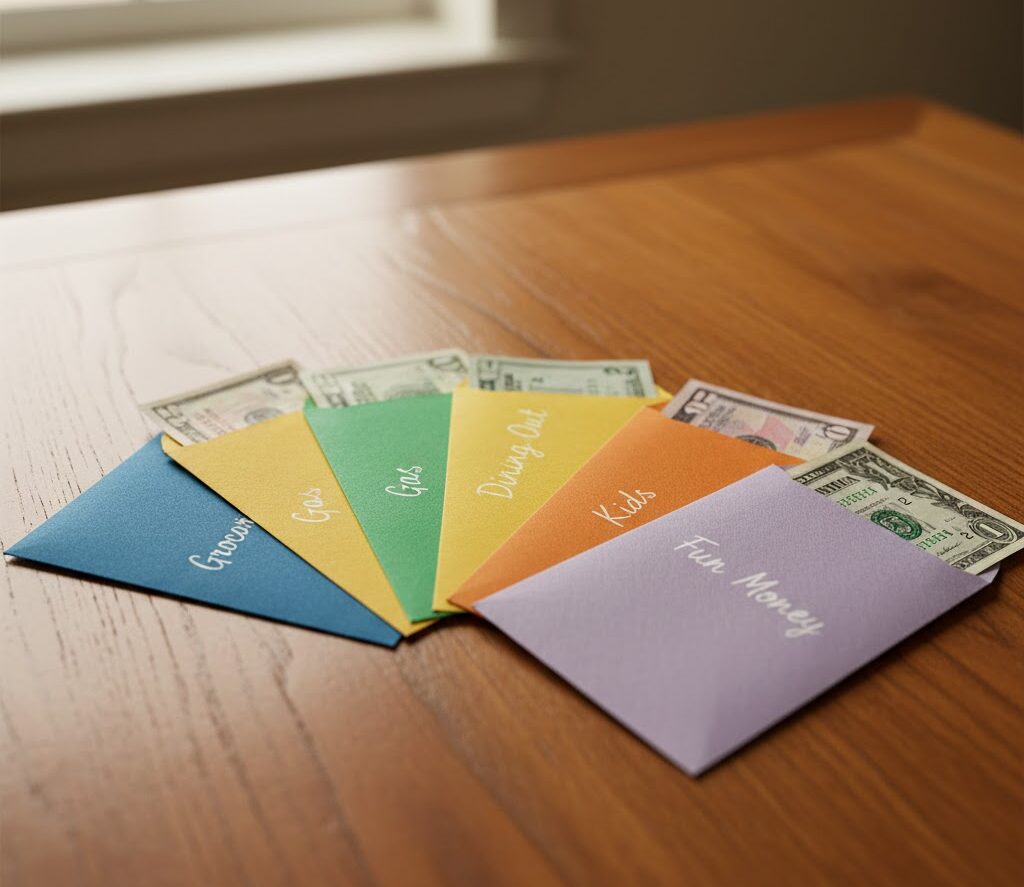
The cash envelope method is beautifully simple and incredibly effective for visual learners.
How to start budgeting using envelopes:
- Withdraw your monthly budget in cash after paying fixed bills
- Label physical envelopes with budget categories like groceries, dining out, entertainment, gas, kids’ activities
- Place allocated amounts in each envelope
- Spend only what’s in each envelope
- When it’s empty, stop spending in that category
This budgeting using envelopes approach works exceptionally well for daily spending. Physically seeing cash disappear creates awareness that credit cards simply can’t match. Think of it like quarters in your childhood piggy bank—when they’re gone, they’re gone.
Modern twist: Don’t carry cash? Try digital envelopes through apps that create virtual categories with the same spending limits.
2. Percentage-Based Budgeting (Including the Famous Rules)
Percentage budgeting divides your income into predetermined buckets, making it one of the most flexible budgeting system for beginners.
Popular percentage breakdown budgeting formats:
50-30-20 Budgeting Rule (Most Popular)
- 50% for needs (housing, utilities, groceries, insurance)
- 30% for wants (dining out, Netflix, hobbies)
- 20% for savings plan and debt repayment
70/20/10 Budget
- 70% living expenses
- 20% savings and investments
- 10% debt repayment or charitable giving
60/30/10 Budget (Aggressive Savers)
- 60% savings (yes, really!)
- 30% needs
- 10% wants
80/20 Budget (Simplified)
- 80% all expenses
- 20% savings
30/30/30/10 Budget (Balanced Approach)
- 30% housing costs
- 30% savings
- 30% other expenses
- 10% fun money
The advantages of percentage budgeting systems include built-in flexibility and automatic scaling with income changes. Got a raise? Your savings automatically increase proportionally.
3. Reverse Budgeting (Pay Yourself First Budgeting)
The reverse budget approach flips traditional budgeting on its head—and it’s brilliant for busy Americans.
How it works:
- Determine your savings goals first
- Automatically transfer that amount to savings immediately after payday
- Pay essential bills
- Spend what remains guilt-free
This pay yourself first budgeting method removes the willpower battle. Your savings happen automatically, like your 401(k) deduction. Whether you’re grabbing pizza after your kid’s soccer game or upgrading your tailgate tent, you’ll know your future is already secured.
Perfect for people with stable income who prefer simplicity over detailed budget categories tracking.
4. Zero-Based Budgeting Method
What is zero-based budgeting and how it works? Every single dollar gets a specific assignment before the month begins.
The process:
- List your expected income
- Assign every dollar to a category: bills, debt repayment, investments, groceries, entertainment
- Your balance should equal zero on paper (not in your account!)
This zero-based budgeting method gives maximum control. Nothing slips through the cracks. It’s like being the coach calling every play—you know exactly what each team member (dollar) should be doing.
Best for: Detail-oriented people who want complete financial visibility and disciplined planners working toward aggressive goals.
Spreadsheet vs Budgeting Apps: Choose Your Tool
Your budget worksheet choice matters as much as your method.
Spreadsheet Budgeting
Pros:
- Complete customization control
- Manual entry increases spending awareness
- Free through Google Sheets or Excel
- Works offline
Cons:
- Requires consistent updating discipline
- More time-consuming
- No automatic categorization
Pros:
- Auto-sync with bank accounts
- Automatic transaction categorization
- Convenient digital budget tracker features
- Visual spending reports
Cons:
- Sometimes experience sync delays
- Initial setup takes time
- Learning curve for features
- Some charge subscription fees
Many successful budgeters use both—apps for daily tracking, spreadsheets for monthly planning.
Expert-Backed Tips to Succeed With Any Budgeting Method

1. Personalize Your Approach: Call your budget something motivational—”Freedom Fund Plan” or “Hawaii 2026 Budget.” Make it yours.
2. Plan Ahead: Create your monthly budget before the month begins. Don’t wait until you’re already spending.
3. Customize Monthly: December (holidays!) looks different than July (vacation!). Treat every month uniquely.
4. Base on Reality: Use actual expected income, not wishful thinking. How to plan your budget every month starts with honest numbers.
5. Prioritize Correctly: Pay essentials vs discretionary spending items and savings goals before splurging on wants.
6. Track Religiously: How to track transactions for budgeting success means reviewing spending at least weekly, ideally daily.
7. Adjust Without Guilt: Life changes. Your budget should too. Flexibility prevents failure.
How to Choose the Right Budgeting Method for You
Step-by-step guide to budgeting successfully starts with self-assessment:
Choose cash envelope if you’re a visual person who overspends on cards.
Pick percentage budgeting if you want structure with flexibility and your income varies.
Select reverse budgeting if you’re busy, have stable income, and clear savings targets.
Go with zero-based budgeting if you’re detail-oriented and want maximum control.
The best budgeting system for financial success is the one you’ll actually stick with—not the one your coworker swears by.
Your Financial Freedom Starts Today
Budgeting methods aren’t one-size-fits-all, and that’s perfectly okay. Whether you’re stuffing cash in envelopes like your grandparents or using cutting-edge apps, what matters is taking that first step.
Financial experts agree: consistent budgeting genuinely changes long-term financial health. It ensures bill payments, enables debt repayment, facilitates investments, and creates a stress-free life where you’re in complete control.
Start small. Pick one method from this guide. Give it two months. Adjust as needed. Your future self—the one enjoying retirement without money worries or taking that dream cross-country RV trip—will thank you.
The best time to start budgeting? Right now. The best method? The one you’ll actually use.
Ready to transform your financial life? Choose your budgeting method to increase savings today and take control of your money story.